 I am not a fan of Chris Richards. Why should I be? He's lived an unromantic life.
Even a high-priced publicist couldn't glorify his existence. Why in the world would
the Snap Button Sentinel want to comment on an album made by a guy who's
never been to jail? His artistic output couldn't be worth a good god-damn if he
hasn't gutted the toughest inmate in the yard. What is the point of the Americana
Bugle reviewing a record by someone who's not or never been a punk junkie?
Obviously a man that has never felt the belly-wrenching pain of withdrawal
can't express the bluest blues that comes with sodomizing family and friends by
separating them from their money for one more bad-side-of-town binge. The
high-minded hipster press loves all that William Blake bullshit. They adore the
ones that wear their hearts on their sleeves along with decorative rags and track
marks. These are the artistes.
Not someone who has a heart bigger than a bus and has been thoughtful, gracious and kind to friends and foes alike. Not someone who comes from a good Midwestern family, ran track in school and is a member of the Elks Lodge in Sheboygan. And that is Chris Richards. Goldenwest is his newest invention and his invention comes from real beauty. The kind of beauty that isn't manufactured by a critic's pen or a sycophant's bluster. The kind of beauty that makes men well up and mamas proud. In every song you hear his worry and his hope. And I love to hear those things in a song. That's really all there is. So you don't need a trumped- up backstory to understand his mastery. It's all there in his music.
No ma'am, I'm not a fan of Chris Richards. I'm much worse, I'm his buddy.
Butch Primm
Nashville, TN
April 17, 2012
Chris Richards Biography
The essence of a story isn't where it begins, or where it ends—it's the path and the process, the movement from a genesis toward a place, or an understanding, or a change.
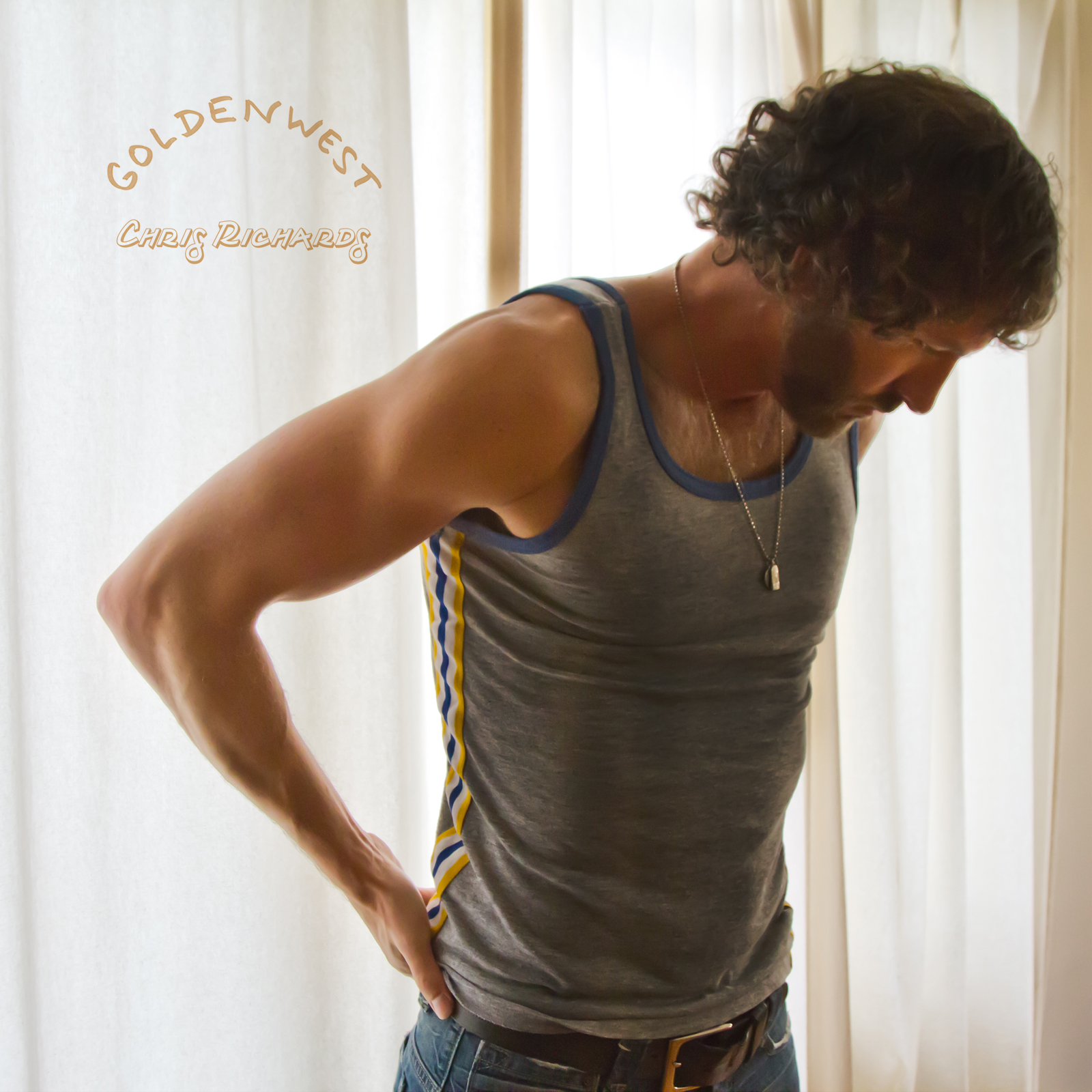
The songs on Chris Richards' latest, newly released LP, Goldenwest, trace the paths of many people, through many moments, many movements, many stories. And that's largely because Richards—whose own path has been a winding one, leading him from Wisconsin out to Los Angeles, toward a sojourn in Nashville and, now, back west to California—hasn't had much luck keeping his mind off the road.
"I've never really thought about why the idea of moving, of motion, creeps up so often (in my songs)," he says. "I think I've probably always just been interested in people on their way to somewhere else. People trying to get somewhere, trying to do something. People in the middle of the clouded journey. The destination just hasn't ever been as interesting to me."
Goldenwest itself—titled, fittingly, after a California road on which a tiny-guest-house-turned-writing-room perched—isn't so much a destination as the encapsulation of a still-unfolding story.
After releasing 2004 LP Tumblers & Grit—home to "Bells of Odilia," one of the "50 Country Songs Every Songwriter Should Know," according to American Songwriter magazine—Richards took to the road steadily to share it, then locked down in Nashville to write, record, produce and absorb, right around the time the music industry's contraction was tightening around that city. The bright critical response to Richards’ writing on Tumblers & Grit led toward a Nashville publishing deal, but over the course of a seven-year stay, much of it spent writing songs for other artists to sing, Richards realized that his particular creative voice—built on "melodies and storytelling (that follows) in the footsteps of Billy Joe Shaver and John Prine," according to Northern California's East Bay Express—might not have landed in its ideal destination yet.
"As far as the business of music in Nashville, there was just never a desire for the kind of work me and my friends were doing. That was pretty clear. But that's just the way it goes sometimes," Richards says. "The way I see it, Music City U. was gracious enough to accept me, taught me everything I cared to learn, and then I got my diploma and a pat on the back. A job wasn't ever part of the deal. I'm extraordinarily grateful, and I deeply love the city and musicians of Nashville."
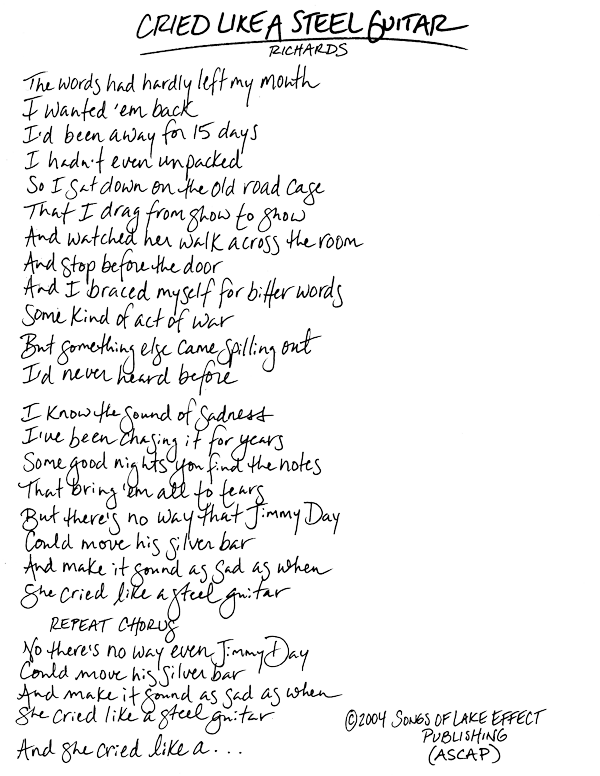
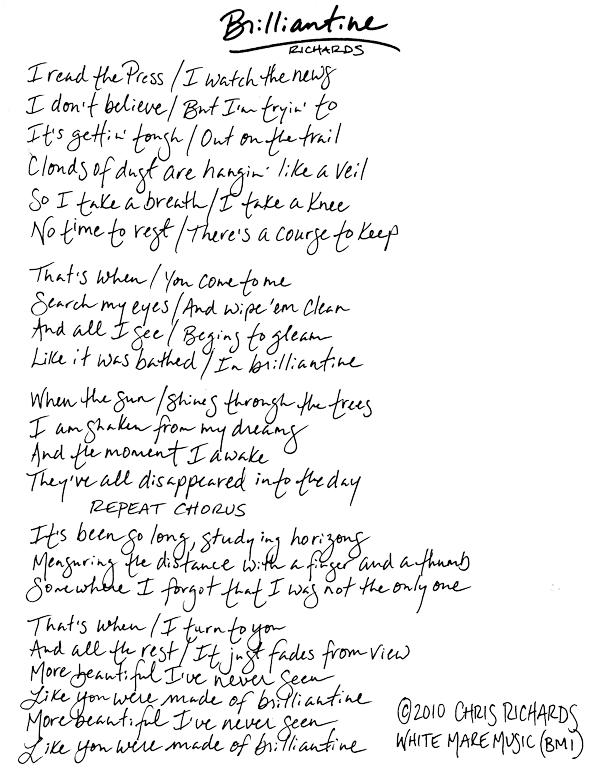
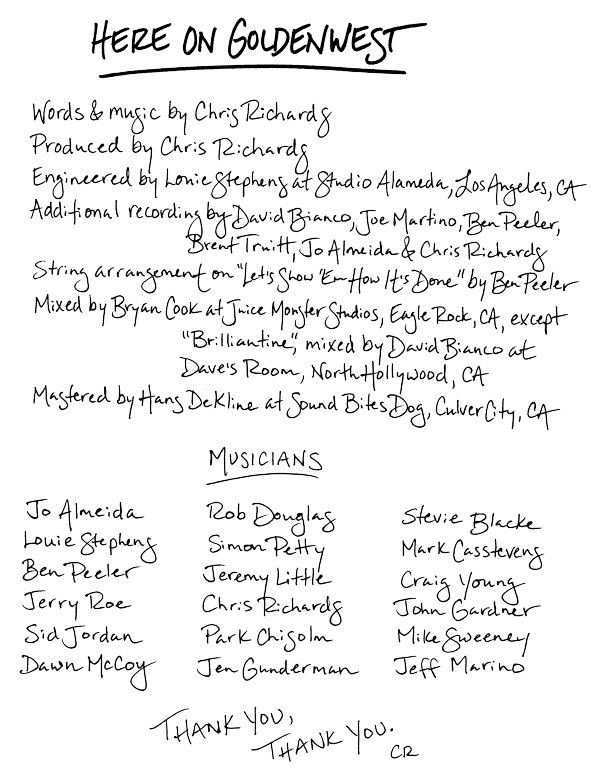
Those lessons—and many songs—traveled with Richards back to Los Angeles in 2010, and eventually into a tiny Downtown L.A. studio with engineer and piano/keys player Louie Stephens (of the rock band Rooney), guitarist Jo Almeida (Dogs D'Amour), multi-instrumentalist Ben Peeler (the Wallflowers, Shakira), Minibar's Sid Jordan and Simon Petty and others for the sessions that became Goldenwest. (A few pieces of the album—including "Cried Like A Steel Guitar" and basic tracks for "Brilliantine," came from sessions in Nashville, too.)
The intentionally broad mix of players—folks whose résumés center on pop, roots, rock, and elsewhere—brought about a sound that anchors in folk but pulls toward broader waters. Acoustic guitars lead, but the moods of Tusk-era Fleetwood Mac make their way in, too.
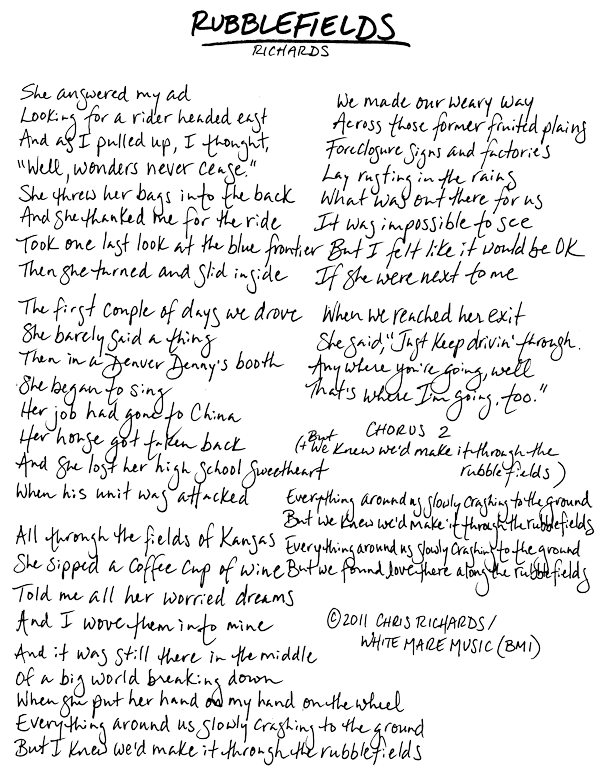
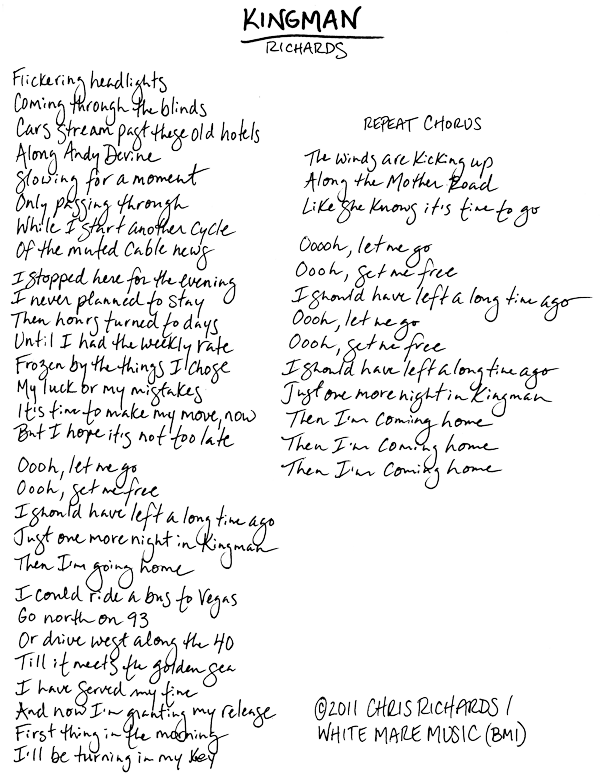
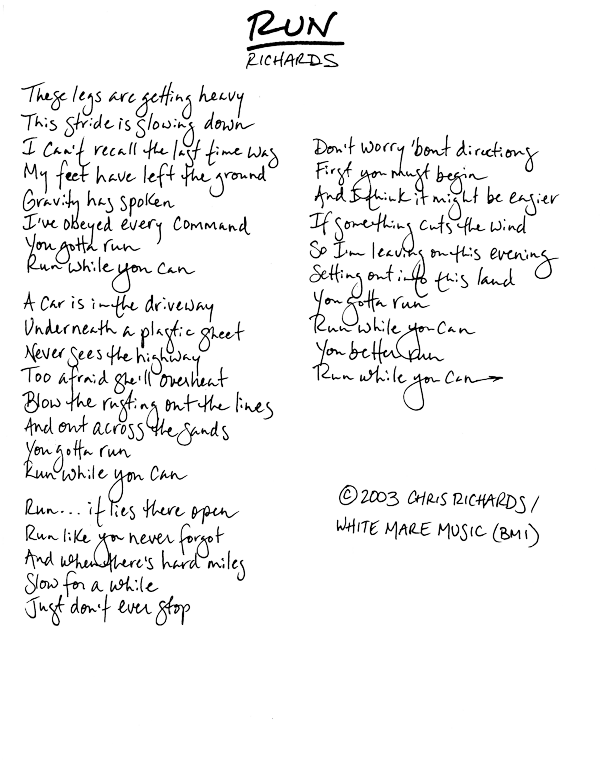
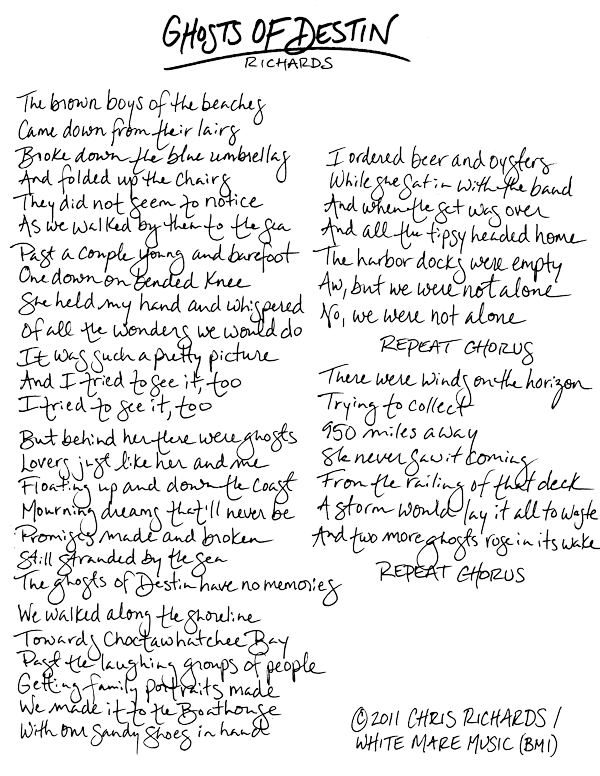
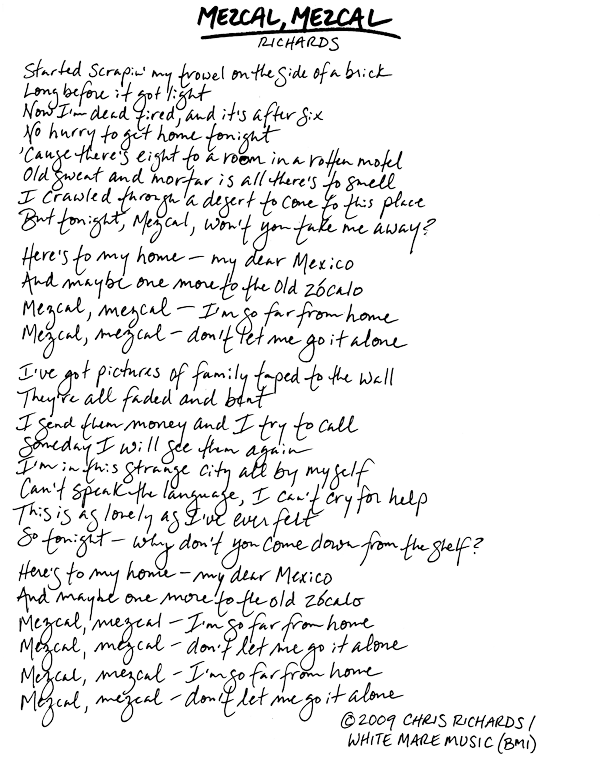
Goldenwest’s songs span from 2003 to 2011, from rooms in Wisconsin and Nashville and California, and the characters inside those songs wander fields in Kansas, beaches in Destin, Fla., a motel in Kingman, Ariz. They seek and find, love and lose. They move.
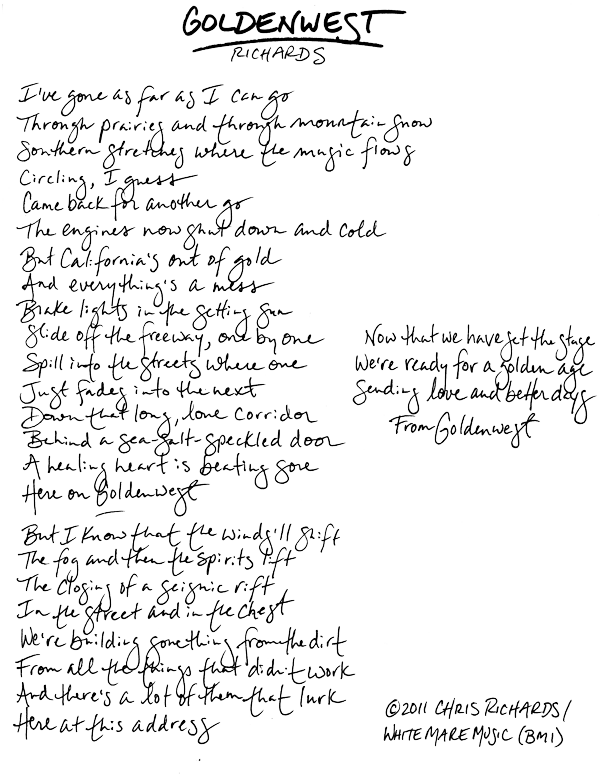
"I've gone as far as I can go, through prairies and through mountain snow, southern stretches where the music flows, circling, I guess," Richards sings at the top of the album's title track. He implies his own path there, but overwhelmingly throughout Goldenwest, the broader, simpler sense of humanity—of all manner of regular people trying to make sense of the stretch of road they're on—beams through.
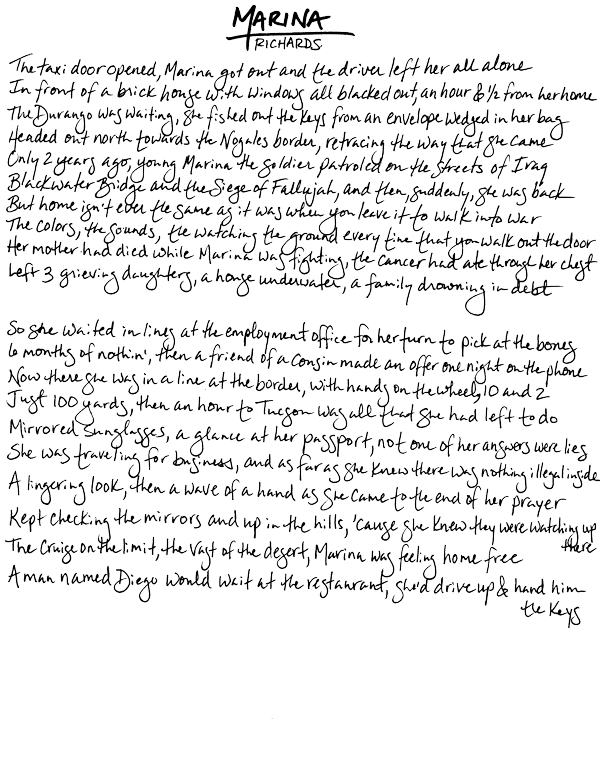
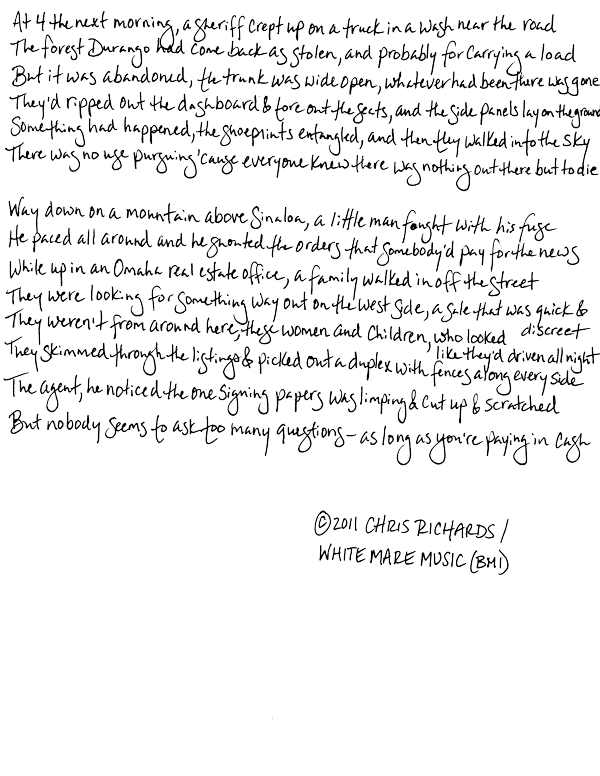
"There are Midwestern characters in these songs. There are Mexican immigrants. There are discharged vets, and drug lords," Richards says. "Those are just all people and situations I'm interested in. Places I've been, people I've known, characters I've met, stories I've read."
The faces and stories that populate Goldenwest stretch across miles, but one major goal in collecting the album's songs, Richards says, was to place the "when" firmly in the now.
"I didn't want the record to sound retro, so the recording sessions were carried out with as much modern equipment and instruments as possible," he says. "(Album track) 'Marina' began life on my iPhone, recorded partially with an app. Likewise, I wanted what was happening in the songs to feel like they were happening now, in 2012. So, yes, the Afghanistan and Iraq wars crept in there. … Same with this awful recession we're in. ... The whole record feels to me like it's taking place now, so I feel like I succeeded in at least that one respect."
Goldenwest underlines, too, what now means for Richards—a time of change, of growth, of renewed, refocused movement.
"I spent the eight years between Tumblers & Grit and Goldenwest mostly on the sidelines, writing songs for other people and waiting for the industry to finish imploding," he says. "But it was finally time to stop waiting for that to all get sorted out, and move forward. Maybe someday folks will find my songs and like ‘em enough to want to record 'em for their own albums. But for now, I'm going to keep on making records the best I know how. That's what I do."
close